On 18 November 2026, New Delhi will host 100 invited leaders from government, cooperatives, farmers’ organisations, industry, finance, science and international institutions. Their task is to decide how India, and the world, can build food systems that cannot be held hostage.
The World’s Food System Is Being Redrawn
Food has become a strategic asset, and the countries and communities that own their value chains will be the ones that stay resilient.
For half a century, the world treated food as a market problem: grow more, and trade it efficiently. That assumption no longer holds. Six forces are now reshaping the global food system at the same time.
| Force | What is changing |
|---|---|
| Fragile supply chains | Pandemics, conflicts and shipping disruptions have shown how quickly global supply lines can break. |
| Strategic inputs | Fertilizer, energy and seed have become instruments of leverage between nations. |
| Climate and water stress | A changing climate is redrawing where food can be grown, and water is becoming a source of contention. |
| Autonomous technology | AI, drones and autonomous systems are changing who controls farm data, inputs and markets. |
| New rules of trade | The shift from voluntary SDG language to binding, finance-linked ESG rules will decide which producers reach which markets. |
| A multipolar order | Trade relationships are being re-priced around scarcity and strategic control. |
In this order, food security is national security. India sits at the centre of the shift. It is one of the world’s largest producers and consumers of food, home to hundreds of millions of smallholder farmers, and home to the world’s largest cooperative network. It is also a leading voice of the Global South.
Yet India’s agricultural value chains remain fragmented at the very moment the global system is being rebuilt. What India decides now will matter far beyond its borders.
GAVCDD exists to hold that conversation in New Delhi, with the world at the table.
A Message from the Convenor
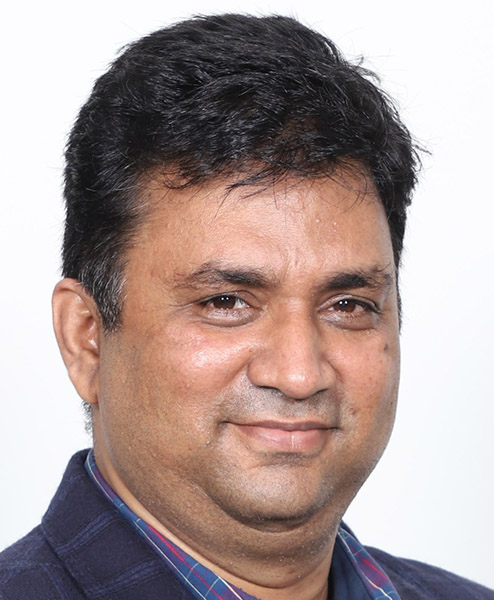 Every great strategic question of our age, whether energy, climate, technology or trade, eventually arrives at the farm gate. Yet the farmer is too often the last person consulted and the first person affected. The GeoAgri Value Chain Dialogue is built to reverse that order.
We are bringing ministers, cooperatives, scientists, financiers, technologists, international institutions and farmers into one room. We will not hold another conference on agriculture. We will ask a harder question: how does a nation, and a world, build food systems that cannot be held hostage?
India’s answer, rooted in cooperation and the vision of Viksit Bharat 2047, is that resilience is built from the last mile upward. Our FlySakhi drone trainers, the rural women whom we will felicitate in Delhi, are the living proof of that answer.
I invite you to join us.
Binod Anand
Secretary General, Confederation of NGOs of Rural India
Founder & Executive President, World Cooperative Economic Forum