About CNRI
India’s Apex Confederation of Rural NGOs
The Confederation of NGOs of Rural India (CNRI) is one of India’s foremost apex platforms for the voluntary sector — a national think tank and movement that unites grassroots organisations, cooperatives, Farmer Producer Organisations, academics and development professionals under a single institutional umbrella. Established in February 2005 under the Societies Registration Act, 1860.
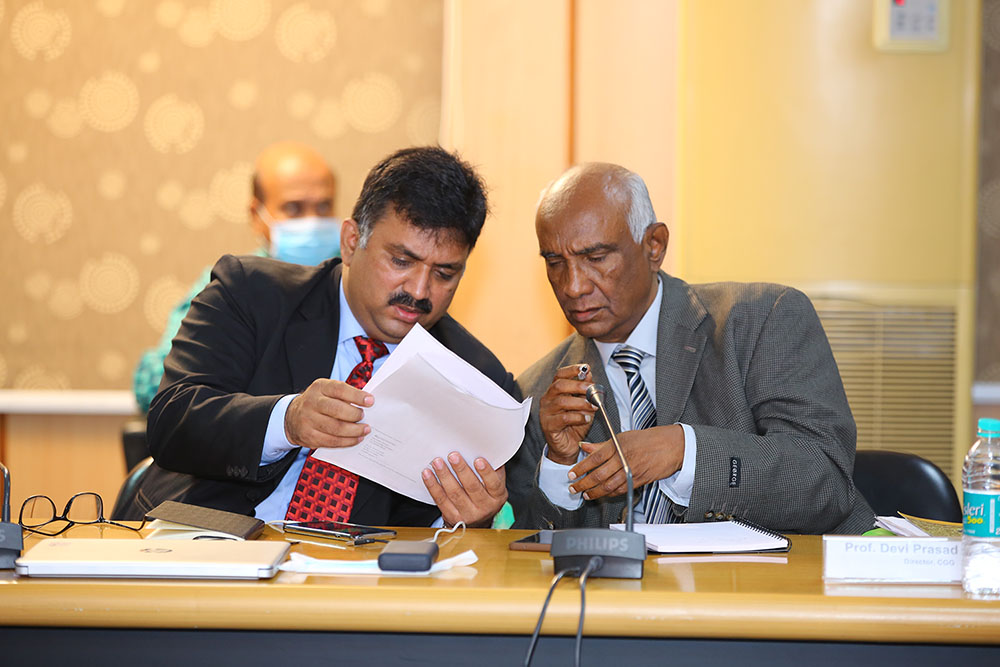
CNRI was created to answer a long-felt national need: a unified voice for civil society that could strengthen coordination among rural organisations and deepen their contribution to national development.
Today CNRI holds Special Consultative Status with the United Nations Economic and Social Council (UN ECOSOC) and is affiliated with the OECD International Network on Financial Education (OECD-INFE), connecting the aspirations of rural India to global policy platforms.
The Genesis of CNRI
Through the 1980s and 1990s, the Planning Commission, the Ministry of Rural Development and several Parliamentary Committees repeatedly emphasised the value of an apex body to unite India’s scattered but vital voluntary organisations. CNRI was conceived as the bridge between civil society, government, academia, cooperatives and development institutions — an organisation that could amplify the collective voice of rural India, promote participatory governance and contribute to evidence-based policy.
A defining moment came in April 2005 at the National Summit of Rural NGOs of India, organised by CAPART under the Ministry of Rural Development. In his inaugural address, the Hon’ble President of India, Dr A. P. J. Abdul Kalam, welcomed the formation of CNRI and underscored the transformative role a united network of rural NGOs could play in village development, employment generation and nation-building.
What CNRI Does
Guided by the belief that civil society is the third pillar of democracy — complementing government and the private sector — CNRI has grown into a nationwide network with State and District Chapters. It supports organisations working across rural livelihoods, agriculture, women and youth empowerment, financial inclusion, disaster resilience, capacity building, governance and social innovation.
- Uniting voluntary organisations under one national platform and giving civil society a collective voice.
- Bridging grassroots communities with government, Parliament, academia and international institutions.
- Producing white papers, position papers and policy research that inform public policy.
- Building institutional capacity through leadership development, training and knowledge exchange.
- Championing the Cooperative Economic Framework (CEF) as a people-first model of development.
A Coordinating Institution — Not a Funding Agency
An important principle has guided CNRI since inception: it is not a funding organisation. CNRI does not provide grants or project finance, and membership does not guarantee access to donor funding. Instead, it functions as a national coordinating, networking, advocacy and capacity-building institution, sustained by membership contributions. This self-reliant model safeguards its independence, transparency and accountability to members and the communities they serve.
Looking Ahead
As India advances towards the vision of Viksit Bharat 2047, CNRI continues to expand its role as a strategic institution for rural transformation. By strengthening civil society, advancing cooperative economics, modernizing agricultural value chains, promoting financial inclusion, encouraging innovation, and fostering collaborative leadership, the Confederation remains committed to building a future where economic opportunity, social equity, and sustainable development reach every rural community. For more than twenty years, CNRI has demonstrated that lasting progress is built through empowered institutions, informed partnerships, and community-led development.

The journey continues with the same conviction that inspired its founding—to create a stronger Rural India that contributes confidently to a stronger India and a more sustainable world.
FREQUENTLY ASKED QUESTIONS
CNRI (Confederation of NGOs of Rural India) is India’s apex platform for the voluntary sector, established in 2005. It unites NGOs,cooperatives, FPOs and development institutions to strengthen civil society and inform public policy for rural development.
CNRI was established in February 2005 under the Societies Registration Act, 1860, and was formally launched at the National Summit of Rural NGOs of India by the Hon’ble President Dr A. P. J. Abdul Kalam.
No. CNRI is a coordinating, advocacy and capacity-building institution, not a funding agency. It does not provide grants, and membership does not guarantee access to funding.
Yes. CNRI holds Special Consultative Status with the United Nations Economic and Social Council (UN ECOSOC) and is affiliated with the OECD International Network on Financial Education.