Co-Founder & Chairman, Confederation of NGOs of Rural India (CNRI)
Chairman: 15 October 2013 – 5 February 2015
Distinguished Civil Servant · Institution Builder · Architect of Government–Civil Society Partnership
The Profile
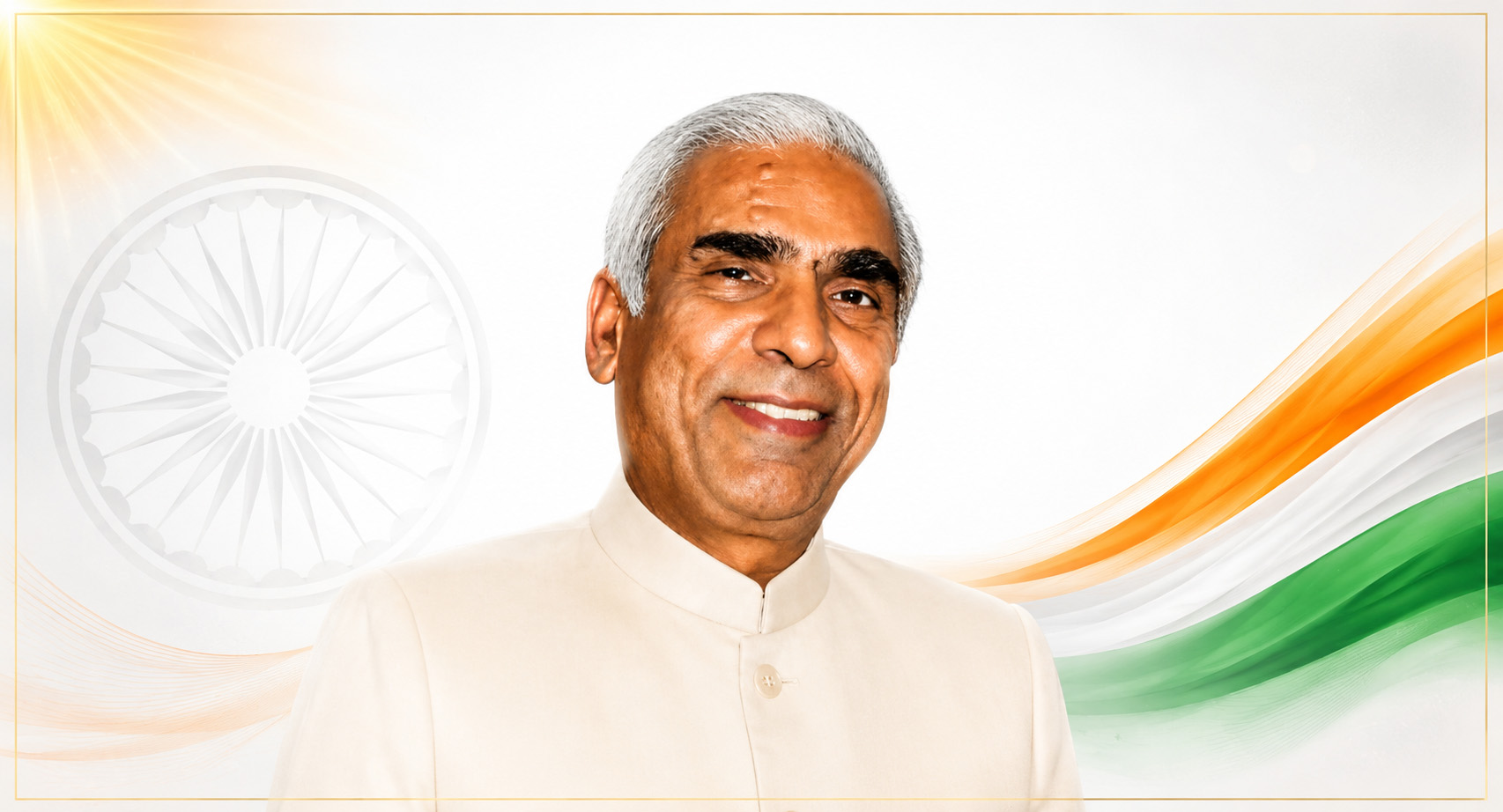
Shri L. V. Saptharishi, IAS, is one of India’s most distinguished civil servants, institution-builders and champions of participatory governance. A senior officer of the Indian Administrative Service (West Bengal cadre), he devoted over three decades to public service, earning national recognition for his integrity, vision and remarkable range — spanning rural development, international trade, industrial policy, textiles, fashion and democratic governance. As Co-Founder and Chairman of the Confederation of NGOs of Rural India (CNRI) from 15 October 2013 to 5 February 2015, he gave a lifelong belief its institutional form: that a nation progresses fastest when government and civil society build it together.
That belief runs through his entire career. As Secretary to the Government of India and Director General of CAPART (Council for Advancement of People’s Action and Rural Technology), Ministry of Rural Development, he turned government–civil society collaboration into practice on a national scale — advancing rural technology, sustainable livelihoods, watershed development, women’s empowerment and grassroots institution-building, and empowering thousands of voluntary organisations as trusted partners in development. It was this experience that he carried directly into CNRI.
His public standing rests on responsibilities of the highest trust. Entrusted by the Election Commission of India as Special Observer for the 2004 Lok Sabha Elections in Bihar — one of the country’s most challenging electoral environments — he became a symbol of impartiality and administrative wisdom. As Additional Secretary and Director General (Anti-Dumping), Ministry of Commerce & Industry, he strengthened India’s trade-defence mechanisms and protected domestic industry. As Director General of NIFT, Founder Chairman of the Fashion Design Council of India (FDCI) and a Founder Member of IFFTI, he became a principal architect of India’s creative economy. His international assignments — with UNDP, the Common Fund for Commodities, FAO, UNCTAD, the ITC, Geneva and others — extended his institution-building instinct to the global stage.
Few public servants have built institutions across so wide a spectrum of national life — from rural development and public administration to trade, textiles, fashion, education and civil society. Within the CNRI family, however, he is remembered not merely as a Chairman but as a mentor, philosopher and guide, whose humility, constitutional values and faith in the transformative power of civil society continue to shape the Confederation’s culture of ethical governance.
His Legacy in CNRI
- He co-founded CNRI and defined its purpose. He envisioned CNRI not as a mere federation of NGOs, but as a national movement to make civil society an indispensable partner in India’s development.
- He institutionalised the government–civil society partnership. A lifelong advocate of collaborative governance, he gave that philosophy its most enduring expression through CNRI — years before it became an accepted governance model.
- He strengthened CNRI’s foundations. Under his stewardship (2013–2015), CNRI strengthened its institutional framework, expanded its national outreach, deepened engagement with policymakers, and emerged as a trusted bridge between government and civil society.
- He brought the CAPART legacy into CNRI. His national experience empowering voluntary organisations directly informed CNRI’s approach to capacity-building, rural technology and grassroots partnership.
- He shaped CNRI’s ethical culture. He is remembered as a mentor, philosopher and guide who inspired thousands of voluntary organisations to uphold integrity, transparency, professionalism and national commitment — the values that still define CNRI’s governance.
Pull-quotes
“Sustainable national progress is achieved only when governments, voluntary organisations, cooperatives, academia, enterprise and communities work together with a shared sense of purpose.”
“CNRI is not merely a federation of NGOs — it is a national movement to make civil society an indispensable partner in India’s development.”