Founder Chairman, Confederation of NGOs of Rural India (CNRI)
The Architect of India’s Organised Civil Society Movement
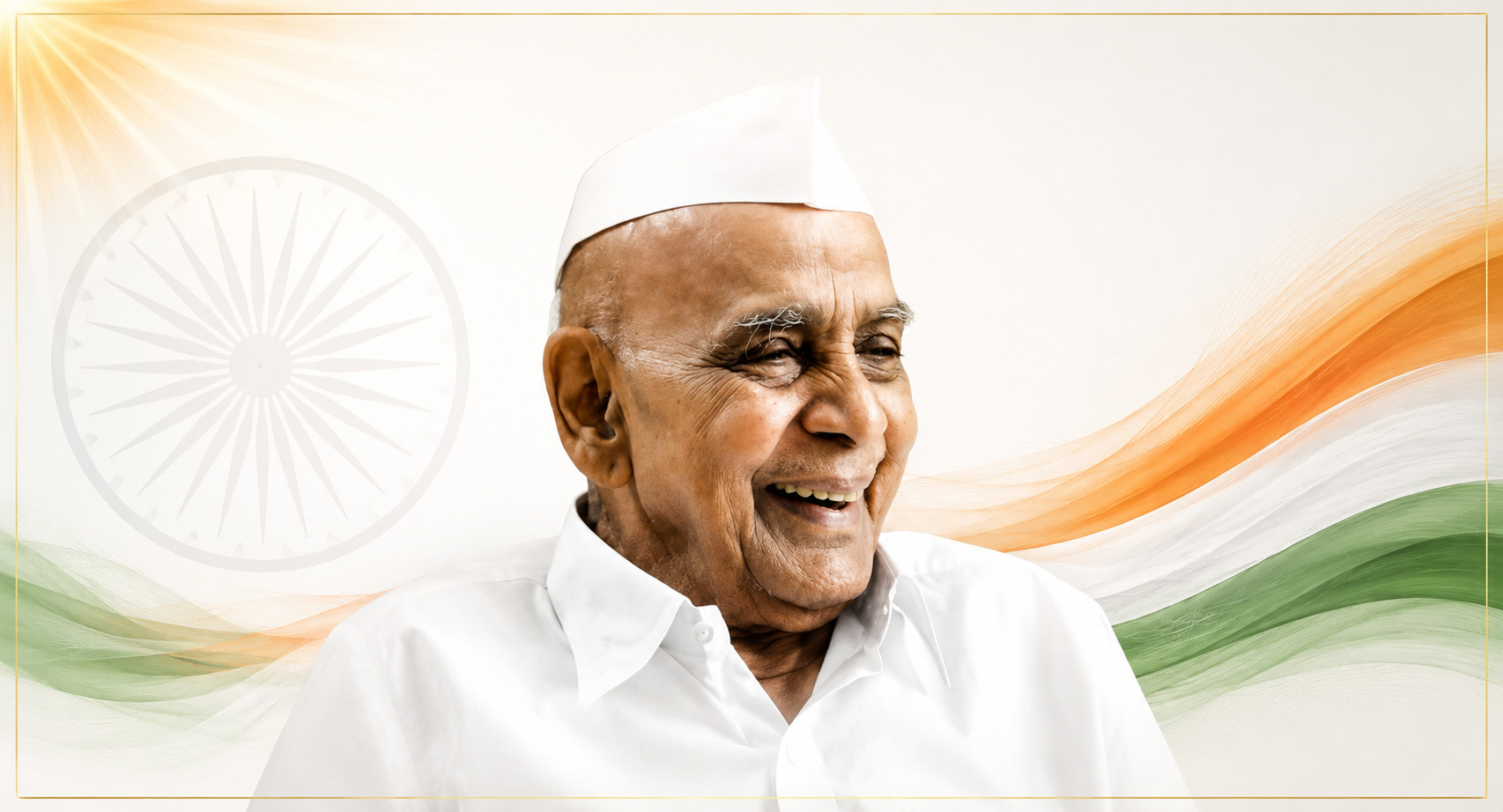
Dr. Dharia held a conviction ahead of its time — that civil society is not a beneficiary of policy but an indispensable partner in governance. From that single idea he built CNRI as a national movement to unite voluntary organisations across regions, sectors and ideologies under one commitment: inclusive development, social justice, environmental sustainability and participatory democracy. Rooted in the Gandhian belief that lasting change flows from empowered communities and local leadership, he set out to make grassroots India visible, organised and heard.
His life’s fieldwork proved the philosophy. Through Vanarai, he demonstrated that organised communities — backed by capable voluntary institutions — could restore watersheds, regenerate forests, revive livelihoods and transform entire landscapes. Watershed development, afforestation, climate resilience, decentralised governance, women’s participation and youth leadership were his causes long before they became the development sector’s mainstream priorities. These same principles became CNRI’s guiding philosophy.
For Dr. Dharia, the office of Founder Chairman was never ceremonial — it was a mission he carried to his final years. He offered CNRI not just his name and stature, but his time: mentoring its leadership, encouraging grassroots initiatives, and insisting always on transparency, accountability and selfless service. His moral authority turned a federation of NGOs into a credible bridge between civil society, government, academia, development partners and international institutions.
He will be remembered as one of the foremost architects of India’s organised civil society movement — a leader who understood that true leadership lies not in authority but in service, and not in recognition but in building institutions that outlive the individual.
His Legacy in CNRI
- He founded the movement, not just the organisation. Dr. Dharia laid CNRI’s intellectual, ethical and organisational foundation — defining it as a national platform to give scattered voluntary organisations a common voice and a shared purpose.
- He set CNRI’s moral standard. He insisted the voluntary sector uphold the highest standards of transparency, accountability and constructive engagement with the State — while fiercely protecting its independence and credibility. That standard remains CNRI’s institutional character.
- He built CNRI’s credibility as a bridge. Under his stewardship, CNRI became a trusted interlocutor between civil society, government institutions, academia and international organisations — advancing capacity building, policy dialogue, rural development, disaster response, social inclusion and good governance.
- He embedded the Vanarai philosophy. Environmental stewardship, watershed regeneration and community-led ecological restoration entered CNRI’s DNA directly from his life’s work.
- He nurtured a generation of leaders. At a time when NGOs worked in isolation, he championed a unified national platform that amplified grassroots voices and mentored a generation of ethical, community-focused civil society leaders.
- He guided CNRI to the end. Until his final years he continued to provide the Confederation with moral leadership, strategic direction and unwavering encouragement.