A right that a citizen does not know she possesses is, in practice, no right at all. For millions of rural and marginalized Indians, the Constitution’s soaring guarantees remained distant abstractions — not because the law excluded them, but because knowledge of the law did. Legal processes seemed intimidating, expensive, and reserved for others; courts and codes belonged to a world that ordinary villagers felt they could never enter. Injustice was therefore often endured in silence, simply because the path to remedy was invisible and the cost of seeking it seemed impossibly high.
CNRI’s National Legal Literacy Campaign set out to make justice legible. Building on its founding belief that awareness is the first form of empowerment, the confederation used its network to carry knowledge of constitutional rights, entitlements, and legal remedies into communities that had never before encountered them in usable form. The campaign treated legal literacy not as a specialist service for the few but as a foundation of citizenship for the many — as essential to a functioning democracy as the vote itself.
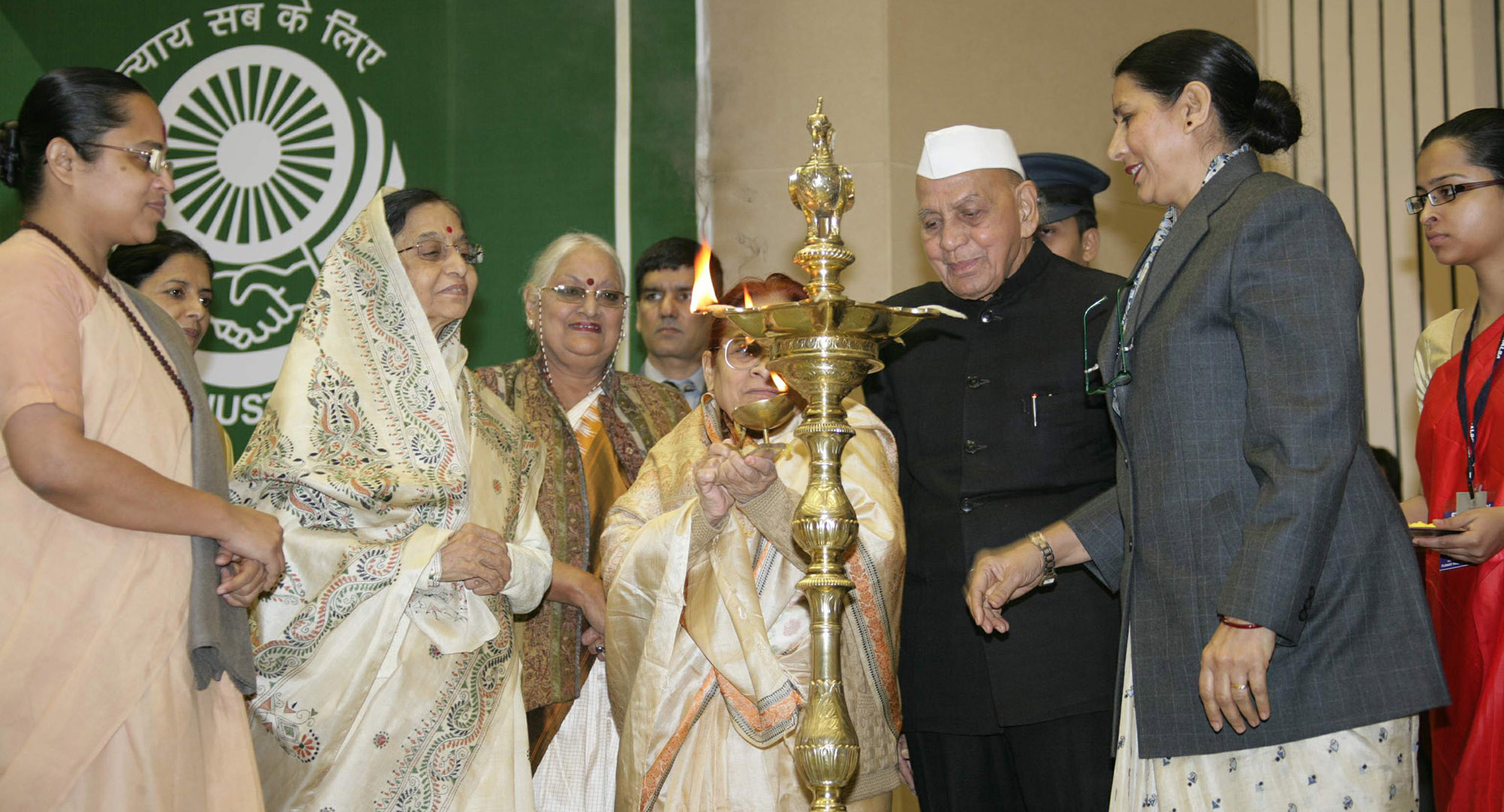
The year’s stature was underlined when the Hon’ble President of India, Smt. Pratibha Devisingh Patil, addressed CNRI’s Annual National Meet. This second Presidential recognition in the confederation’s short life affirmed its growing standing as a serious and trusted voice of civil society, and it brought national visibility to the cause of legal empowerment — signalling that access to justice for the poor was a national priority, not a peripheral concern.
| ACTION TAKEN |
- Conducted legal literacy camps at scale. Across the member network, CNRI organized camps that explained constitutional rights, legal entitlements, and the practical steps citizens could take to seek redress — demystifying a system that had long seemed closed and forbidding to rural and marginalized people.
- Trained NGO volunteers as para-legal workers. Recognizing that professional lawyers could never reach every village, CNRI equipped grassroots volunteers to serve as first points of legal guidance — helping citizens navigate their options and directing them to legal aid, Lok Adalats, and appropriate remedies.
- Promoted awareness of accessible justice mechanisms. The campaign highlighted the tools designed to make justice affordable and reachable, from free legal aid to alternative dispute resolution, so that cost and distance would no longer bar the poor from the remedies to which they were entitled.
- Hosted a Presidentially recognized National Meet. The Annual National Meet, addressed by the Hon’ble President of India, brought national attention to legal empowerment and affirmed the role of civil society in advancing access to justice for all.
- Embedded rights awareness in community work. CNRI wove legal literacy into the broader activities of its member NGOs, ensuring that awareness of rights became a durable feature of grassroots development rather than a one-time event.
| IMPACT |
- Citizens learned to claim their rights. Rural and marginalized communities gained the awareness needed to understand and assert their legal and constitutional entitlements — the essential precondition of genuine empowerment and equal citizenship.
- Access to justice widened. By connecting citizens to legal aid and grievance mechanisms, the campaign opened the doors of the justice system to people who had previously believed those doors were closed to them.
- The voluntary sector’s standing rose. A second Presidential recognition in three years affirmed CNRI’s credibility and elevated the perceived importance of civil-society-led legal empowerment in the national imagination.
- A distributed para-legal capacity was created. The training of grassroots volunteers built a lasting, dispersed capability for legal guidance that continued to serve communities well beyond the life of the campaign itself.
- Democracy was deepened. By making rights usable rather than merely declared, the campaign strengthened the substance of citizenship and the everyday functioning of Indian democracy at the grassroots.
ENDURING SIGNIFICANCE
By treating legal literacy as a foundation of citizenship rather than a specialist service, CNRI advanced a quietly radical idea: that justice belongs to those who know how to reach it, and that a trusted network can teach millions to do so. The campaign transformed constitutional promises from distant abstractions into practical instruments in the hands of ordinary people. Empowerment, the year affirmed, begins with knowledge — and a democracy is only as real as the ability of its poorest citizens to claim the rights it guarantees them.