In its twentieth year, CNRI arrived at a destination that would have seemed scarcely imaginable at its modest founding: a leading global advocate of the Cooperative Economic Framework, championing a model of development built on people before profit, community ownership, farmer-owned markets, cooperative enterprises, and economic democracy. The confederation that began in 2005 as a platform for scattered rural NGOs now carried a coherent, tested economic vision onto the world stage — the fruit of two full decades of grassroots work refined, over time, into a global argument about how economies should be organized and for whom.
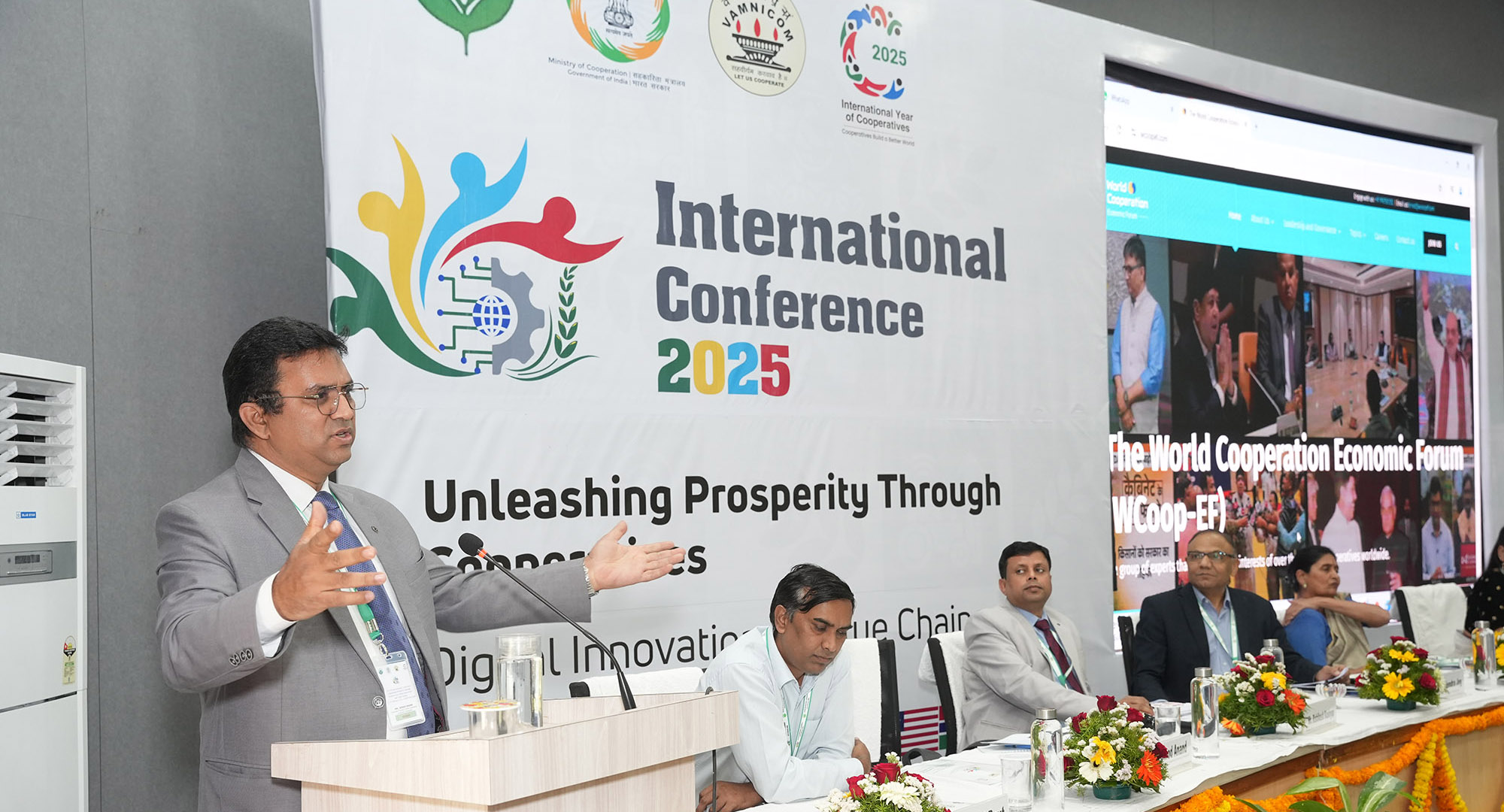
The year was at once a culmination and a commencement. It celebrated twenty years of patient institution building while marking CNRI’s fullest emergence as an international voice for cooperative economics. Through national and international policy dialogues, research, conferences, and sustained stakeholder engagement, the confederation sought to sensitize policymakers, governments, multilateral institutions, academia, industry, and civil society to the transformative potential of the CEF — presenting cooperative economics not as nostalgia for an older order, but as a practical, forward-looking pathway to the Sustainable Development Goals and to a more inclusive, resilient, and sustainable future.
The twentieth-anniversary milestone also revealed the underlying unity of CNRI’s long journey. The unbroken logic — from uniting NGOs, to including the excluded, to empowering farmers, to building cooperatives, to articulating and now globally championing an economic framework — stood clearly visible in retrospect. Each milestone had prepared the next; each decade had built upon the last. In 2025 the confederation both honoured that journey and set its sights firmly on the decades still to come.
| ACTION TAKEN |
- Led national and international policy dialogues. CNRI convened and joined high-level conversations across India and the world on cooperative economics, carrying the Cooperative Economic Framework into the highest forums of policy and debate.
- Advanced research and conferences. The confederation deepened the intellectual foundations of the CEF through research and international conferences that brought together scholars, practitioners, cooperators, and decision-makers around its vision.
- Sensitized diverse global stakeholders. CNRI worked to persuade policymakers, governments, multilateral institutions, academia, and industry of the transformative potential of cooperative economics for inclusive and sustainable development.
- Positioned the CEF as an SDG pathway. The confederation framed the Cooperative Economic Framework as a practical and credible route to achieving the Sustainable Development Goals and to building a resilient, people-centred economy.
- Celebrated twenty years and looked ahead. CNRI marked two decades of institution building while renewing its mission, charting a forward course as a bridge between communities, government, and the world.
| IMPACT |
- CNRI emerged as a global voice. The confederation firmly established itself as a leading international advocate for cooperative economics, economic democracy, and a people-centred model of development.
- Two decades of fieldwork reached the world stage. The evidence of a 7,000-member network and twenty years of grassroots practice was carried into global policy dialogue, giving the CEF unusual authenticity, credibility, and weight.
- A future course was charted. The year defined CNRI’s enduring role as a bridge between communities, government, cooperatives, academia, industry, and international institutions for the decades ahead.
- The founding vision was fulfilled and renewed. The apex platform imagined in 2005 had become a globally recognized champion of an inclusive, empowered, and self-reliant India — and set its sights on the work still to come.
- The journey’s unity became visible. Twenty years revealed an unbroken logic from uniting NGOs to championing a global framework, giving CNRI’s mission a coherence and momentum to carry it forward.
ENDURING SIGNIFICANCE
Twenty years after a President launched a platform for rural NGOs, that platform now speaks for cooperative economics on the world stage. The journey from 2005 to 2025 traces an unbroken and deliberate logic — from uniting scattered NGOs, to including the excluded, to empowering farmers, to building cooperatives, to articulating and championing a global economic framework — and points clearly toward a future in which people, cooperation, and economic democracy stand at the very centre of development. The twentieth anniversary was thus not an ending but a threshold: a moment to honour two decades of impact and to commit, with renewed purpose, to the decades of nation building still ahead.