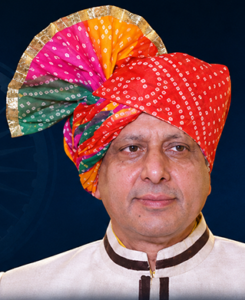
Shri Jitendra Sharma
Chairman, Confederation of NGOs of Rural India (CNRI)
(Since 3 May 2024)
Shri Jitendra Sharma has been serving as the Chairman of the Confederation of NGOs of Rural India (CNRI) since 3 May 2024. He succeeded Dr. Mohan Kanda, IAS (Retd.), former Chief Secretary of the Government of Andhra Pradesh and former Secretary to the Government of India, who led the Confederation with distinction before demitting office due to health reasons. As Chairman, Shri Sharma has assumed the responsibility of carrying forward CNRI’s enduring legacy of strengthening civil society, promoting participatory governance, and advancing sustainable rural development.
As Chairman, Shri Sharma provides strategic leadership to one of India’s foremost apex civil society organisations dedicated to rural development, participatory governance, social justice, and community empowerment. Under his stewardship, CNRI has strengthened its role as a national platform connecting voluntary organisations, development practitioners, policy institutions, academic bodies, and grassroots leaders committed to inclusive and sustainable development.
His leadership is guided by the conviction that a vibrant, accountable, and nationally committed civil society is indispensable to India’s democratic and developmental journey. He has worked to reinforce CNRI as a credible bridge between government institutions and grassroots organisations, encouraging dialogue, collaboration, policy advocacy, and citizen participation in nation-building.
Since assuming the chairmanship, Shri Sharma has focused on organisational revitalisation, expanding CNRI’s outreach across states and districts, strengthening institutional partnerships, and promoting greater participation of youth, women, professionals, and community-based organisations in the development process. He has encouraged innovative approaches that integrate social responsibility, community participation, technological advancement, and institutional accountability.
Recognising the rapidly evolving national and global environment, Shri Sharma has broadened CNRI’s developmental perspective to include social cohesion, national resilience, community preparedness, and institutional capacity building. Under his guidance, the Confederation has increasingly focused on creating awareness among civil society organisations about emerging challenges affecting rural communities and democratic institutions while promoting constructive citizen engagement and national unity.
He has placed particular emphasis on strengthening policy advocacy by enabling voluntary organisations to contribute meaningfully to public policy through evidence-based consultations, grassroots experience, and participatory governance. His approach seeks to ensure that civil society remains an active and constructive partner in India’s development while preserving its independence, credibility, and commitment to public service.
Committed to sustainable rural transformation, Shri Sharma has encouraged initiatives that promote livelihood enhancement, environmental conservation, local self-governance, skill development, women’s leadership, youth empowerment, social innovation, and community-driven development. He believes that lasting national progress can only be achieved through empowered communities, accountable institutions, and active citizen participation.
Under his stewardship, CNRI continues to strengthen its position as India’s leading national platform for voluntary organisations, fostering collaboration among civil society, government, academia, and development institutions in pursuit of an inclusive, resilient, and developed India.